Feds Offer States $1.2 Billion to Adopt More Stringent Energy Codes
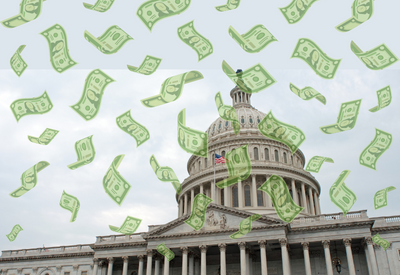
The Biden Administration launched several federal initiatives to reduce greenhouse gas emissions and improve the energy efficiency of buildings, with two specifically designed to encourage state and local governments to update their building energy codes.
According to the National Association of Home Builders (NAHB), embedded in two recent pieces of massive legislation was some $1.2 billion in incentives specifically for states to update their energy codes for new homes.
The $1.2 trillion Infrastructure Investment and Jobs Act, signed in November 2021, provides $225 million ($45 million per year for fiscal years 2022-2026) for the Department of Energy’s Resilient and Efficient Codes Implementation (RECI) program. Under RECI, states can receive grants to update to more recent model energy codes. That money can be spent on conducting studies, training, implementation, and a variety of other purposes.
The more recent Inflation Reduction Act sets aside nearly $1 billion for states and local governments to adopt the most recent energy codes, which – as of now – are the 2021 International Energy Conservation Codes (IECC). These grants are expected to be awarded through the fiscal year 2029.
Both grant programs allow state governments to partner with local jurisdictions and other stakeholders, including HBAs and home builders, in the application process.
The first deadline for the infrastructure act money is Jan. 31, 2023, for the submission of concept papers. Full Applications are due by Mar. 27, 2023. For complete details go here and click on DE-FOA-0002813.
The specific DOE Guidelines for the Inflation Reduction Act grants are still in development.
The most important distinction between the two programs is the restrictive nature of updates under an IRA grant. States must move to at least the 2021 IECC to be eligible. Infrastructure (RECI) money, meanwhile, can be used to update to a more recent version. So, if a state is currently using the 2009 IECC, they may qualify for funding to adopt the 2015 edition.
Because of this flexibility, NAHB is encouraging states to apply for infrastructure bill grants and hopes that members will do the same. Even if a state misses the deadline in the first year, there will be more opportunities each year to apply.