Lighting for Better Brain Health: Why 40 Hz Tech is the Next Big Upgrade
Today’s lighting is expected to deliver more than simply illumination. Over time, industry professionals have seen at shift to full‑on wellness support. First, it was glare control. Then circadian tuning. Now we’re entering a new chapter: Lighting that can actually help support memory and cognitive function.
That might sound futuristic, but the groundwork is already here. A new type of nonflickering 40 Hz light has shown measurable improvements in memory performance for older adults, and it’s designed to fit into everyday fixtures. At LEDucation 2026, Aleddra CEO Dr. Matthew Maa and Wellness Lighting product manager Dr. Judy Luo presented research on how this new version of the light can deliver benefits in many different settings.
And unlike earlier flicker‑based systems, this one doesn’t leave people rubbing their eyes or reaching for aspirin.
Why This Matters Now
The numbers around cognitive decline are hard to ignore. According to the Alzheimer’s Association, Alzheimer’s care costs in the U.S. are projected to hit nearly $1 trillion annually by mid‑century, as diagnoses are expected to nearly double. That’s not just a healthcare problem; it’s a building‑design problem.
Senior living facilities, memory‑care centers, clinics and even workplaces are looking for ways to support cognitive health through the built environment. Lighting is one of the easiest levers to pull. It’s noninvasive, it’s already part of every space, and it can be upgraded without major disruption.
What the Research Actually Found
Earlier research from MIT showed that 40 Hz flickering light could help reduce Alzheimer’s‑related markers in animals. The problem was the flicker itself. Maa called out that visual discomfort as a major limitation of those early systems.
The new approach gets around that by delivering 40 Hz stimulation without visible flicker. The light looks steady and comfortable, but it still triggers the brain’s natural 40 Hz rhythm. In other words, it behaves like normal light but does more behind the scenes.
A university‑led clinical trial tested this nonflickering 40 Hz light with older adults who didn’t have cognitive impairment. Participants used the light for one hour a day, five days a week, over four weeks. The results were encouraging.
The study reported that people receiving the 40 Hz light showed greater improvement in delayed recall on two memory tests compared with the control group. Real‑time EEG recordings also showed strong 40 Hz activity during the sessions, and the amount of improvement in memory was linked to increases in parietal 40 Hz power.
Maa summarized the results like this: A single 60‑minute session of 40 Hz nonflickering light can increase gamma brain activity in older adults with normal cognition, and the technology is practical and ready for future efforts to enhance brain health.
What About Installation?
The clinical setup gives us a good sense of how this lighting is meant to be used. The parameters fall right in line with typical task‑lighting conditions.
- Target distance: 50–100 cm from the face
- Illuminance: 400–500 lux at eye level
- Session duration: 1 hour
- Frequency: 5 days per week
Nothing about this requires specialized medical equipment. It’s standard lighting practice with a specific output profile.
That means contractors can integrate this technology into pendants, sconces, task lights, troffers or portable lamps, whatever fits the space.
Where You’ll See Demand First
Senior Living and Memory Care
These facilities are already investing in lighting that supports circadian rhythms and visual comfort. Adding cognitive‑supportive lighting is a natural next step.
Healthcare and Rehabilitation
Neurology clinics and cognitive‑rehab programs are likely early adopters. They’re already set up for structured daily routines, which makes the one‑hour session model easy to implement.
Education and Workplace
Gamma stimulation supports focus and memory recall, which makes it appealing for classrooms, libraries, training centers and office focus zones.
Residential
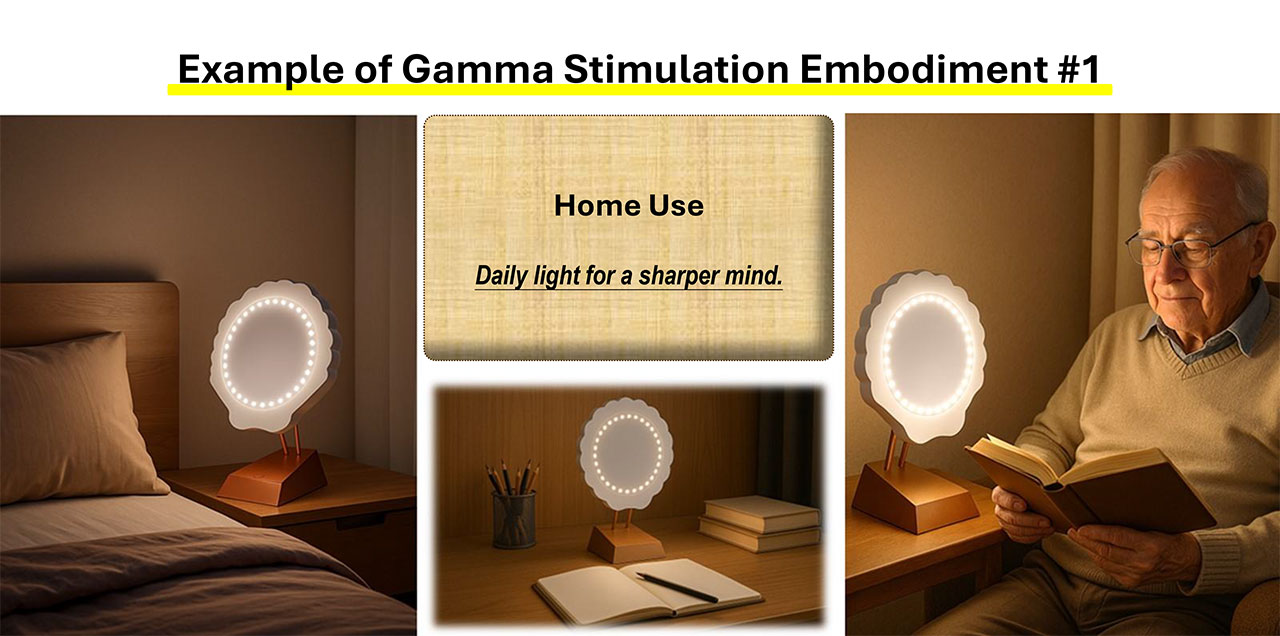
As wellness lighting becomes more mainstream, homeowners, especially older adults, will look for lighting that supports long‑term brain health.
Why Contractors Should Pay Attention
Lighting is becoming a tool for cognitive support, not just visibility. The nonflickering 40 Hz approach is comfortable, practical and backed by real data. That’s a compelling differentiator.
It’s not just about lumens or color temperature anymore. And because the light is nonflickering and visually comfortable, it can be integrated into standard fixtures without special wiring or controls.
The aging population, rising dementia rates and growing interest in wellness lighting create a strong market pull. And the good news is that you don’t need to be a neuroscientist to sell it.