
Transforming Tennis Court Lighting Through a Fence Mounted Approach
A residential case study with broad implications for US sports lighting
Across the lighting and construction industry, sport courts represent a familiar challenge. They are highly visible, technically demanding, and often constrained by zoning rules, light spill limits and budget realities. As a result, many courts remain unlit or are overbuilt with systems designed for large venues rather than recreational use. A residential tennis court installation at the Velarde residence offers a clear example of how a different lighting approach can address these issues while opening new opportunities for electrical contractors and lighting representatives.
Why Tennis Courts are Commonly Left Unlit
Traditional tennis court lighting has changed little over the past several decades. High mast pole systems typically require tall poles, concrete foundations, engineered drawings, lift equipment and extended permitting timelines. While effective for large facilities, these systems introduce challenges in residential neighborhoods, schools, parks and space constrained sites. From a construction standpoint, cost, complexity and compliance often outweigh the benefits, leaving many courts without lighting despite clear demand.
Residential Court as a Proof Point
The Velarde residence reflects a common scenario seen across the country. The homeowner wanted to extend usable court hours without altering the character of the property or impacting nearby homes. Traditional lighting solutions raised concerns around aesthetics, construction disruption and excessive illumination beyond the court. Rather than adapting a commercial solution, the project required a system designed specifically for residential and recreational environments.
Fence-Mounted Alternative
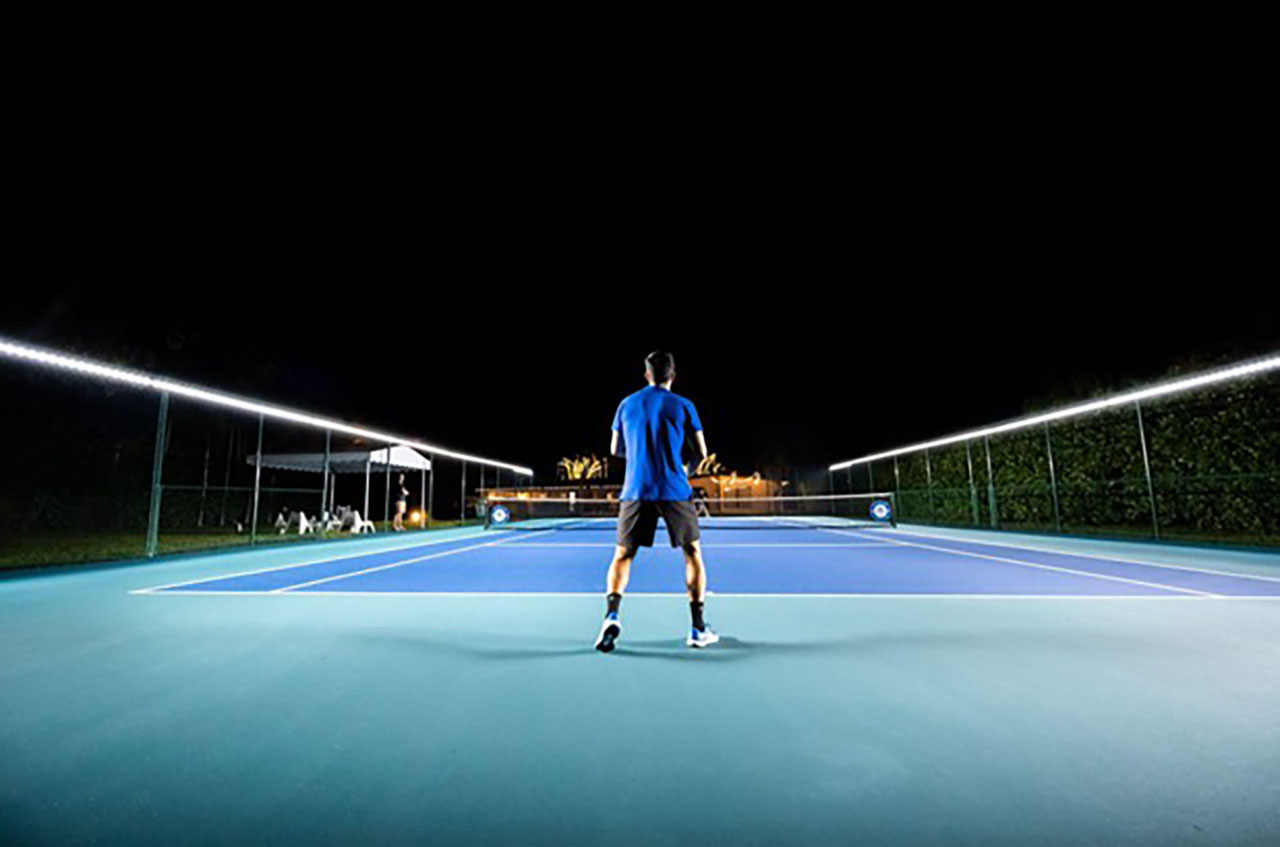
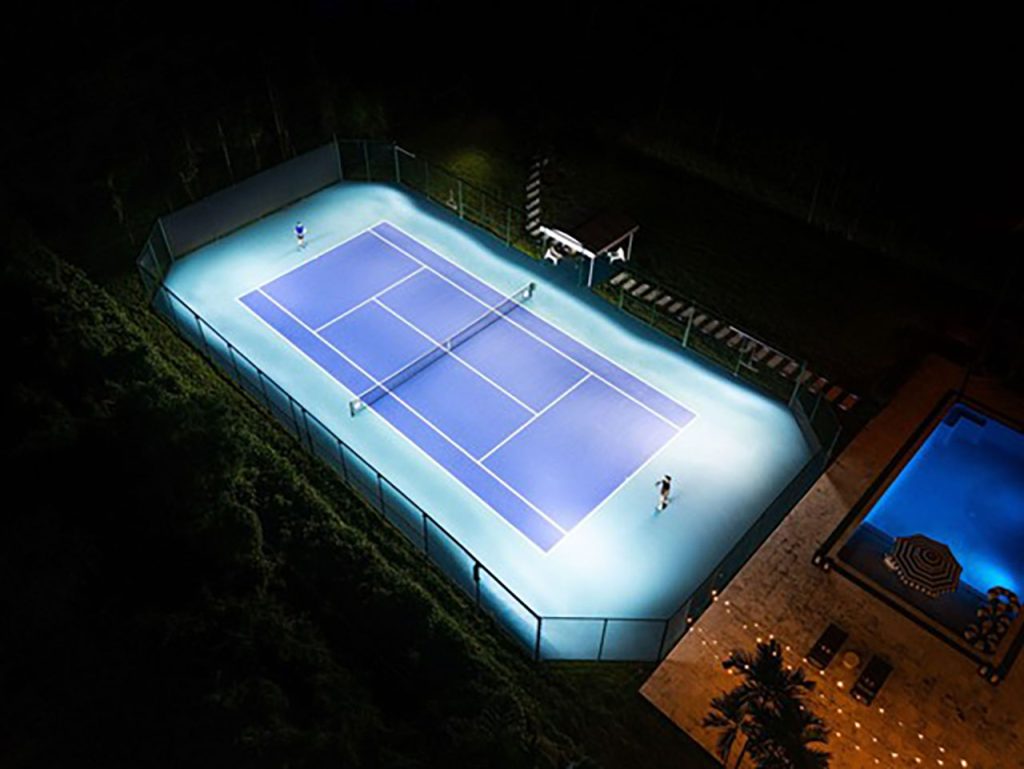
The Tweener Lighting System approaches court illumination from a different perspective. Linear LED fixtures mount directly to the existing court fencing at approximately nine to ten feet above grade. Fixtures run the length of each side of the court, delivering focused and even light across the playing surface. This design eliminates the need for poles, structural foundations and heavy equipment while maintaining performance appropriate for tennis and pickleball play.
Installation and Performance Considerations
At the Velarde residence, installation was completed using the existing fencing structure, allowing the system to be installed and operational in a short timeframe. The lower mounting height and linear distribution provided adequate recreational lighting while keeping glare and light spill tightly controlled. Light levels outside the fence line remain minimal, making the system suitable for sites with nearby residences or strict lighting regulations.
Technical Implications for Contractors and Lighting Professionals
Although this installation took place at a private residence, the implications extend well beyond a single court. Across the United States, many tennis and pickleball courts remain unlit due to the cost, permitting requirements and construction complexity associated with traditional pole mounted lighting systems. Fence mounted lighting offers a practical alternative by reducing structural scope while maintaining performance appropriate for recreational play.
From an installation standpoint, the system is designed for simplicity and repeatability. When mounted to an existing fence, each system can be installed by a crew of two to three people in as little as one day. No structural or building permits are required in most projects since the system does not introduce new foundations or vertical structures. This allows contractors to complete projects quickly while minimizing coordination with other trades. Electrical requirements are equally straightforward. Each system operates on 220 VAC and requires a two pole 20 amp breaker. Power is supplied to two power supply boxes per system, eliminating the need to run electrical service to multiple poles around the court perimeter.
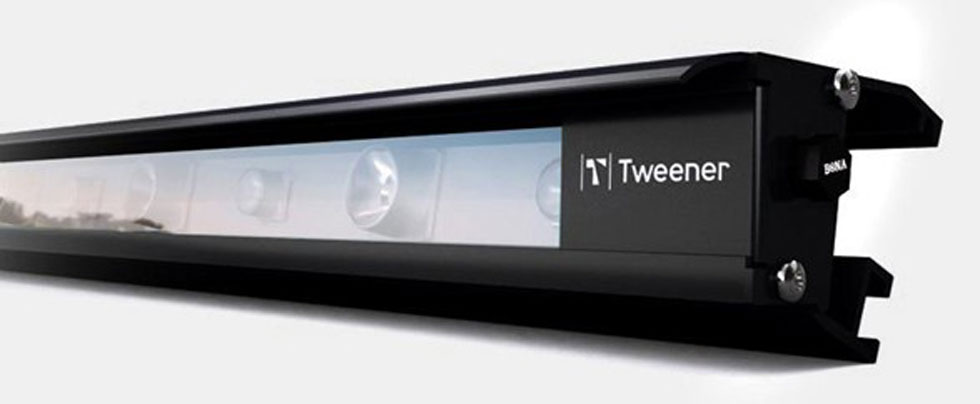
By aligning mounting height, light distribution and electrical design with the needs of recreational courts, fence mounted lighting avoids the over engineering common in traditional sports lighting. Tweener provides a compliant and scalable solution for electrical contractors and lighting representatives across private courts, clubs, municipal facilities and schools.
Learn more at www.tweenerusa.com