What if We Don’t Care About Keeping LEDs Cool?
April 8, 2024
By Jeffrey Dross
Cost cutting and the loss of LED Performance
The Cleveland Museum of Art holds, what most experts believe to be one of the best collections of Asian Art in the world.
The post WWII Curator-Director, Sherman E. Lee made important connections throughout the continent while serving there in the military during and after the war. Those connections proved invaluable as the museum ramped up the department. Special Exhibitions of the collection are well attended and always of interest. In the latest, “China’s Southern Paradise: Treasures from the Lower Yangzi Delta,” I saw something I had never seen before.
The lower Yangzi was a crucial center for the trades, craftsmanship and production for centuries. It was close to water, fertile land and necessary raw materials. Unfortunately, working in this era was still difficult and the climate is often humid. To keep the laborer cool, a bamboo “sleeveless garment” was created. That piece, in remarkably good shape was included in the exhibition. Small 1/16” diameter by 1” long segments of bamboo reeds were strung together in a diamond pattern. The undershirt created a layer of air between the skin and fabric, thereby helping to keep the worker cool.
Sleeveless Garment – China – 1880s
I was amazed by this utilitarian object, far more than the decorative ceramic vases, jade carvings and fine scroll paintings.
Keeping cool has always been the goal of LEDs. Like the creation of an elaborate woven undershirt, a fair amount of time (and money) has been spent insuring that the LED is operating at peak performance in lamps and luminaires. But what if we didn’t care? What if we allowed LEDs to “run hot?” What would happen?
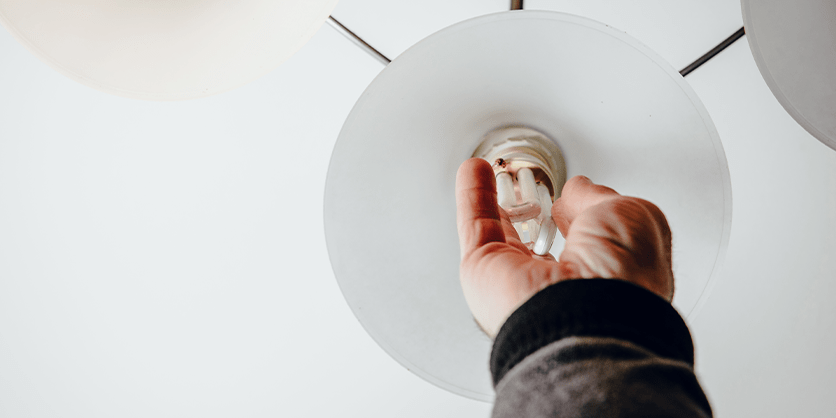
The short answer is what we are now seeing in many LED replacement lamps, premature death. In an effort to cut costs, long hours of life have been sacrificed. Rather than the 40,000 to 50,000 hours of expected life, most commonly available light bulbs are now promising 15,000 to 20,000 hours. There is a belief that consumers are “OK” with lower levels of performance. Decisions have been made based on this assumption. To establish lower replacement lamp costs, forgo the “costly” heat protection components and shorten life expectancies.
I worry about what’s next. As we become accustomed to LED light in our homes, will we see lower lumen output next, like the shift from 120V to 130V on budget incandescent lamps a few decades ago? Will lower levels of color rendering be tried? Sure people with higher levels of color sensitivity will see the differences, but almost 85% of the population won’t. That might be worth the gamble.
15 % of the population
I believe this is setting the stage for the creation of a “GE Revel-type” LED lamp. If you’re not an old codger like me, in a world of 25¢ light bulbs, GE determined that some people (15% of the population?) would spend more money (four to eight times more!) for better quality light bulbs. I have no way of knowing, but this had to be a profitable decision. Revel lamps were still available last year before the exit of incandescent.
I look forward to longer life, better lumen output and higher, more consistent levels of color across the spectrum in my light. I’d be a customer. For those features, I’ll gladly pay more. Now, swapping out my Banana Republic tees for a bamboo version…maybe not so much!
More information available here
Related Article
How to Effectively Select LED Tape- Part 1
Since its introduction about a decade ago, LED Tape has become an almost ubiquitous element of lighting design.