
ALA President Weighs in on Supreme Court Tariff Ruling
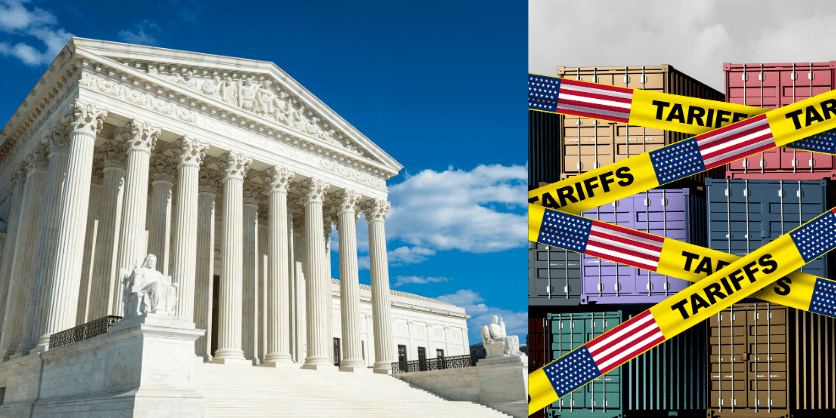
In light of the Supreme Court’s ruling today that President Trump cannot invoke the International Emergency Economic Powers Act of 1977 to set tariffs on imports, American Lighting Association (ALA) President & CEO Jon Melchi issued a statement to ALA membership that takes into account the lighting industry’s point of view.
“Today’s Supreme Court ruling striking down the use of IEEPA as a basis for tariffs is an important development, but it does not yet bring certainty for the lighting industry,” he said.
“While this decision removes one legal tool, it leaves open critical questions about how tariff authority may be reasserted and what comes next for manufacturers, distributors and retailers already operating in a volatile trade environment.”
As manufacturers, importers, and retailers now ponder the possibility of refunds for tariffs paid and how/when that might transpire, Melchi said, “We are also continuing our research into what the process for the potential recovery of duties already paid may look like. Members deserve timely, practical guidance, not speculation, and that is where our focus will remain. We will continue to monitor developments, engage directly with policymakers and share updates as soon as they are available.”
As manufacturers, importers, and retailers now ponder the possibility of refunds for tariffs paid and how/when that might transpire, Melchi said, “We are also continuing our research into what the process for the potential recovery of duties already paid may look like. Members deserve timely, practical guidance, not speculation, and that is where our focus will remain. We will continue to monitor developments, engage directly with policymakers and share updates as soon as they are available.”
Coincidentally, on this day last year ALA hired Palmer Schoening as its government affairs consultant. A principal of Schoening of Schoening Strategies in Washington, D.C., Schoening has worked for more than 10 years with several small business trade associations, including the National Association of Electrical Distributors (NAED), to provide them with a presence in Washington.
“I want our members and partners to be clear on this point. The American Lighting Association will remain active and engaged in advocating on behalf of our industry,” Melchi stated. “Predictable trade policy matters. Clarity matters. The ability to plan, invest and compete with confidence matters.”
In his statement to membership, Melchi wrote, “For the lighting industry, the ruling raises several critical and unresolved questions.”
Specifically:
• The status of negotiated trade arrangements: What happens to trade agreements or informal understandings reached with U.S. trading partners under the threat or expectation of IEEPA-based tariffs?
• Potential tariff refunds: In Justice Kavanaugh’s dissent, he notes that this decision does not provide guidance on what a process for refunds might look like stating, “The Court says nothing today about whether, and if so how, the Government should go about returning the billions of dollars that it has collected from importers.”
Melchi noted that the ruling is also unclear as to how quickly, and through what specific mechanisms, the Administration will seek to reassert tariff authority.
Furthermore, Melchi mentioned that Administration officials have already signaled that there are alternative tools available that could still allow tariffs to be in place.
Potential alternative authorities outlined in Melchi’s letter include:
• Section 338 (Tariff Act of 1930): This authority allows the U.S. to enact tariffs against countries deemed to discriminate against U.S. commerce and has been specifically referenced by Secretary Bessent.
• Section 122 (Trade Act of 1974): Section 122 allows temporary tariffs of up to 15% for 150 days in response to balance-of-payments concerns, an option explicitly suggested by the Court of International Trade as a preferable alternative to IEEPA.
• Section 201 (Trade Act of 1974): Section 201 is a safeguard mechanism allowing tariffs of up to 50%, though it requires USITC investigations and public hearings and would take longer to implement.
• IEEPA alternatives: The International Emergency Economic Powers Act (IEEPA). “One of the plaintiffs’ lawyers argued (Page 116 of the transcript) that tariffs are not allowed under IEEPA, but policies like quotas may be. Tariff-rate quotas weren’t raised, but licensing fees were (Page 46). The administration could potentially enact a rebrand under this same authority.”
Melchi concluded, “In short, while today’s ruling removes one tool from the Administration’s trade arsenal, it does not signal an overall retreat from tariffs. Our team will be closely monitoring which statutory pathway the Administration pursues next and will keep you updated with the latest trade news.”