
Bridge Combines Aesthetics With 100 Years of Structural Support
All Photos Courtesy of New York State Thruway Authority
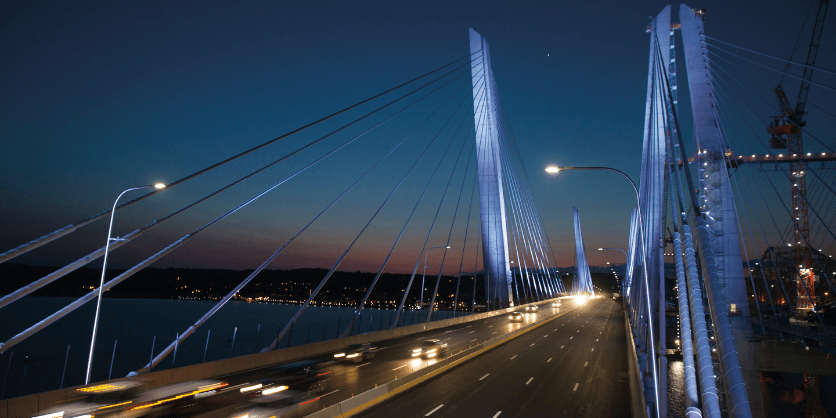
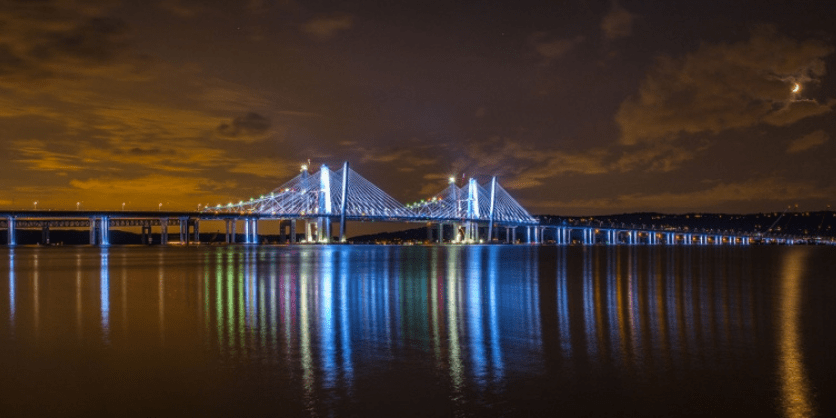
Whether you refer to this famous crossing by its original name – the Tappan Zee – or by the name given to the newly built replacement (Governor Mario M. Cuomo Bridge), this important roadway connects two demographically dense counties Rockland and Westchester) in New York and is a local landmark.
When constructing the new, highly traveled bridge, materials longevity and design integrity were paramount. The design team selected Hapco as a supplier because of its 75-year manufacturing history.
According to the company, “Hapco possesses the engineering, R&D, and manufacturing expertise for projects requiring custom aluminum pole solutions. The nationally acclaimed Tappan Zee Bridge replacement was the perfect example of a project requiring innovative design, extensive testing, and unparalleled manufacturing capabilities. The custom 5-degree tilt, custom vibration dampening system, and 100-year design life criteria were a perfect fit for Hapco’s pledge of ‘Better By Design,’ adding to our long history of proven performance.”
Built across the Hudson River in the mid-1950s, the original name combined a reference to the local Indian tribe Tappan and the Dutch word for sea (Zee). When officially opened in December 1955, its three-mile length made it the longest bridge in the state of New York. The bridge was unique for its time, featuring a seven-lane design incorporating a middle lane with movable barriers. This design allowed eastbound and westbound traffic to be switched based on the prevalent morning and evening commuter direction, alleviating congestion in this quickly growing metropolitan area. Just 25 miles north of Midtown Manhattan, the bridge serves as a vital artery for residents, commuters, and commercial traffic between NYC and the suburbs of the lower Hudson Valley.
The Tappan Zee bridge was originally built with a 50-year design life and was anticipated to accommodate 100,000 vehicles per day. By the early 2000s, hundreds of millions of dollars had been spent to maintain and repair the deteriorating structure, and traffic was averaging nearly 140,000 vehicles per day. These changes led to the decision to replace the iconic structure.
The Opportunity
Plans for construction on one of the largest public-works projects in the United States included eight traffic lanes, four breakdown/emergency lanes, bike and pedestrian lanes, and six scenic overlooks. The end result was envisioned to be a visually striking and recognizable landmark.
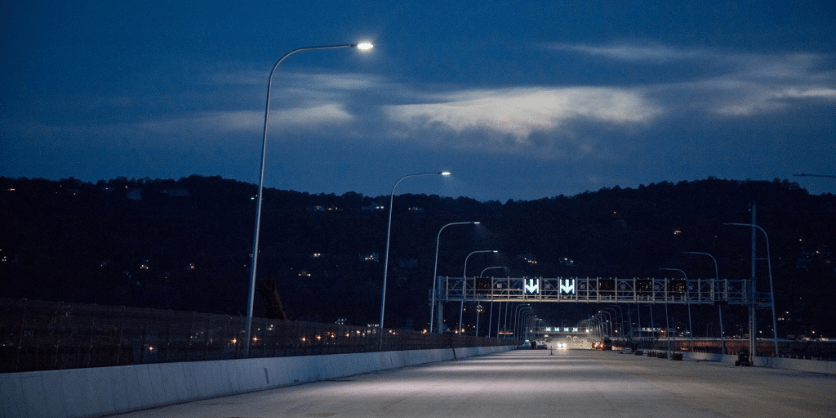
Lighting poles for the project were a challenge. The project required a custom pole design that would meet the 100-year design life and “Buy American” criteria. And while aesthetics was a key criteria, the fact that the installation would be 139 feet above the river caused additional environmental and vibration issues from a bridge-mounted application to be taken into account. A combination of design, engineering, R&D, and manufacturing capabilities was required to provide a turn-key solution.
The Solution
Familiar with Hapco’s long history in aluminum pole manufacturing, its lifetime warranty, and ability to meet the “Buy American” initiative from its Abingdon, Virginia-based facility, the project contractor turned to Hapco in the early design phases of the project.
Meeting vigorous 2009 AASHTO specifications when mounted at 150 feet above grade, the pole design that was ultimately chosen had a unique 5-degree tilt, which required a custom base and hours of testing in the manufacturer’s in-house R&D lab. A custom vibration dampening system was also developed and tested to work in the angled pole. The poles were installed prior to the opening of all lanes on September 11, 2018 and will be appreciated by the drivers of more than 50 million vehicles a year for the next 100+ plus years.
Related articles