The Three-Legged Stool: Proper Lighting Can’t Stand on Energy Efficiency Alone
By Mike Lehman
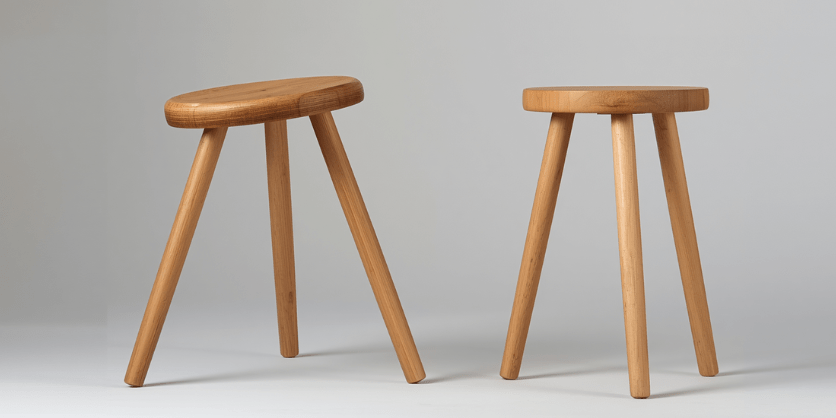
A three-legged stool has long been a symbol of stability. Ask any craftsman what makes a three-legged stool work and the answer will always be the same: it only works if all three legs are the same length.
Shorten one and the whole thing wobbles. Remove one entirely and everything falls.
For roughly 15 years, the commercial and industrial lighting industry has been sitting on a stool with one very strong leg: energy efficiency. Meanwhile, the other two legs – sustainability and human impact – continue to get shorter.
The result? An industry that’s starting to wobble in ways that can no longer be ignored.
The Sprint That Left Two Legs Behind
Understanding how we got here requires a quick trip back in time.
For nearly a century, electric illumination followed a simple model: fixtures provided the housing and the power, and a lamp provided the light. Those two elements lived as separate, interchangeable components that were easily maintainable and universally understood. Every homeowner or facility manager knew that when a bulb burned out, you went to the store, matched the size and wattage, screwed it in and moved on.
Then came the rapid rise of LED popularity around 2011. Commercially viable for architectural applications, LED technology promised dramatically reduced energy consumption, longer lifespans, reduced maintenance costs and smaller form factors. LED adoption was less of a transition than a sprint. It was a collective, urgent race to replace every incandescent, metal halide and fluorescent source with something smaller and more efficient.
But in that sprint, something critical was overlooked.
Unlike traditional light sources that generate a lot of heat, LEDs generate only a small amount of heat, but it is held internally. Heat is the primary enemy of an LED’s lifetime. To maximize the performance and lifespan that LED technology promises, heat must be drawn away from the chip through proper thermal management: the right substrate and assembly, a direct-contact heat sink and full integration into the luminaire itself. You can’t just drop an LED chip into a socket the way you screwed in an incandescent bulb and expect 50,000 to 70,000 hours of consistent beautiful life — physics won’t allow it.
Then, the industry moved toward integrated luminaires. The LED was designed into the luminaire. No more separate lamps. No more replaceable bulb. Manufacturers maximized luminaire efficacy, achieved remarkable energy savings and satisfied the urgent demand for efficiency.
The problem was that in the rush to strengthen that one leg of the stool, the industry lost focus on the other two legs.
The Disposable Luminaire: A Crisis That’s Already Here
Walk through any commercial facility, school or retail environment today and you will find roughly 10 to 15 years of integrated LED luminaires, fixtures that were likely sold with one, three-, or five-year warranties.
The lights performed well early on. But unlike traditional light sources that burn out visibly and abruptly, LEDs degrade gradually and silently, slowly dimming over thousands of hours until they’re generating a fraction of their original output. The switch gets flipped, and the light continues to draw energy, but the space is darker than intended.
This slow degradation creates real consequences, especially for the occupants and the room’s intended function. Eye strain increases. Productivity and safety suffer. The people in those spaces – from residents, employees and students – often have no idea the problem is happening because there’s no sudden failure to signal it and no burned-out bulb to trigger a response.
That brings us to the second leg of the stool: sustainability.
When an integrated luminaire reaches the end of its useful life, there’s no bulb to swap. In many cases, there’s no module to replace. The entire fixture – housing, driver, electronics and LED chip – goes into the trash and then into a landfill. Some of what’s inside those products, particularly in lower-quality electronic drivers, isn’t something that should sit in a landfill indefinitely.
The scale of this problem is staggering. We have years of integrated LED products installed across millions of commercial buildings. Some of it was installed by reputable manufacturers that are now developing replacement modules and retrofit solutions. But some of it was purchased through low-cost online channels from suppliers with no ongoing support infrastructure, and those products have nowhere to go but the trash. A contractor who may have secured a “great deal” on LEDs 10 years ago is now looking at ripping out ceilings, disrupting operations and disposing of products they have no sustainable path for.
This is the disposable luminaire dilemma: an industry that promised sustainability through energy efficiency is now confronting a massive and growing waste stream it wasn’t prepared for.
The path forward starts with better information and better questions. Programs like the WELL Building Standard and Living Building Challenge are next-generation frameworks that address material transparency, recyclability and human health — giving specifiers and facility managers a way to evaluate products beyond lumens and watts. Environmental Product Declarations (EPDs) and Declare labels provide additional useful resources.
These aren’t perfect solutions, but they are meaningful starting points. The real goal is to shift the industry from a cradle-to-grave mindset to cradle-to-cradle, designing products and purchasing practices with end-of-life in mind from day one.
This means manufacturers should be designing for modularity and replaceability, be transparent about what’s inside a product and clearly communicate what can be recovered and recycled. It also means the marketplace has to meet manufacturers halfway by asking better questions and placing real value on long-term total cost of ownership (financial, sustainable and human) rather than upfront price alone.
Light Is Life: Restoring the Human Aspect of the Stool
The third, and arguably most important, leg is humanity.
When the industry made its sprint toward LED efficiency, something quietly disappeared from the conversation: the profound impact of light quality on human beings.
Traditional light sources certainly had imperfections, but they also had characteristics humans had lived with for generations; from warm color rendering, omnidirectional distribution and intuitive dimming behavior. In the rush to maximize lumens per watt, many of those qualities were sacrificed.
The result shows up in ways both obvious and subtle. Consider color rendering, where LEDs inherently lack the volume of red wavelengths present in incandescent light. The R9 value – a metric measuring how well a light source renders the color red – was largely ignored in the early years of LED adoption because of the focus on brightness in lieu of the wavelengths that are necessary for human health. Today, California Energy Commission Joint Appendix 8 (JA8) requires residential light sources to provide color rendering index (CRI) of 90 or higher and R9 of 50 or higher. Select retailers now require similar color quality metrics in certain sections of their stores. The industry had to rediscover, by noticing what was missing, that people need accurate full-spectrum light for health and to see food, faces and spaces the way nature intended.
These aren’t minor aesthetic concerns. Light affects circadian rhythms, mood, alertness, safety and productivity. It shapes how we experience every built environment we occupy. Other than air and water, light is the only thing that affects all living creatures. We spend an enormous effort regulating air quality and water purity, yet we’ve treated light as an afterthought, a commodity evaluated only on watts consumed and price per unit.
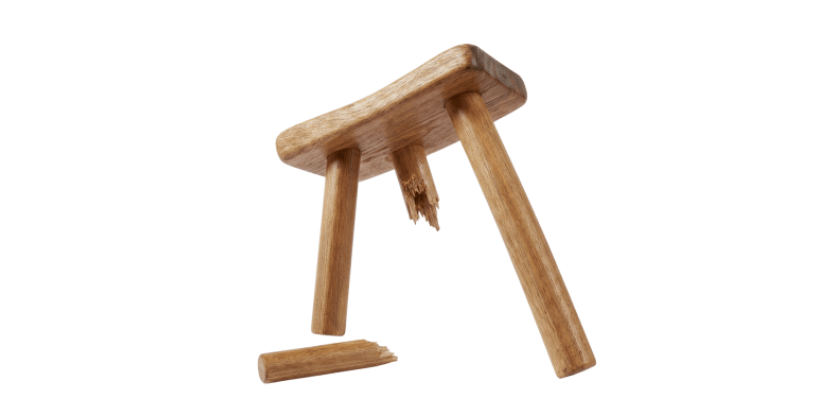
The three-legged stool of proper lighting is wobbling. The industry has done significant and important work on the first leg of energy efficiency, but the second and third legs need urgent, industry-wide attention.
The tools, standards and design thinking to address all three issues exist today. Integrated luminaires can be engineered for modularity. Declare and EPD frameworks provide transparency about materials and end-of-life. Advanced color science and research give us the metrics to specify light that genuinely improves the lives of the people that experience it.
What’s needed now is a shift in how the entire ecosystem, from manufacturers, specifiers, contractors and facility managers, think about what lighting is actually supposed to do.
Manufacturers must develop solutions to help the market evolve. Leviton is working on products that are field-replaceable by the end user, so luminaires do not need to be removed completely. Luminaires also can be made for recyclability and stamped with the appropriate recycling icon. We also develop retrofit solutions for luminaires that are already installed.
Packaging is now being designed to maximize product safety while also minimizing environmental impact by using low-impact recyclable materials. Finally, manufacturers must continue working with specifiers, agents, contractors and organizations including the IES, CIE, WELL, Green Globes, LEED and the International Living Future Institute to develop new solutions and educate the marketplace on the importance of lighting.
It’s not just about reducing an energy bill or filling a space with adequate lighting. It’s about optimizing the impact of lighting by supporting and enhancing the human experience in a way that’s environmentally responsible and aesthetically pleasing from initial specification to the luminaires’ next evolution.
______________________________________________________________________________
About the Author
Mike Lehman, LC, IES, GGF, LEED AP ID+C, LFA is the General Manager of the ConTech, Intense and Birchwood Lighting Brands at Leviton. With over 30 years in the industry, he has been recognized by the Green Building Initiative (GBI) as a member of the 2024 Class of Green Globes® Fellows.