What CEDIA Already Knows About Systems Delivery
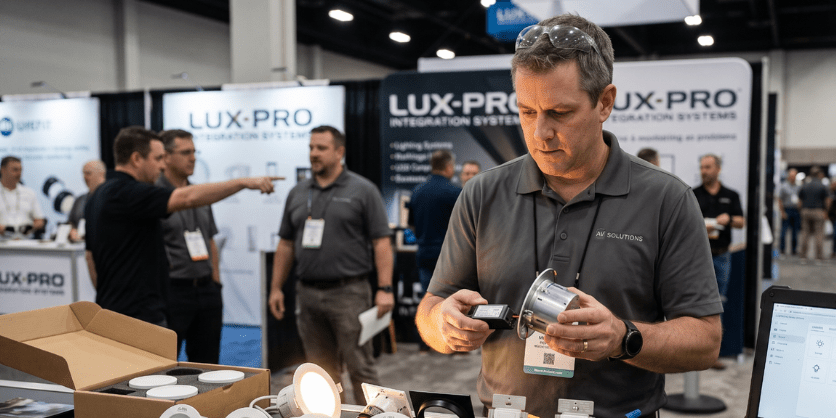
There are nearly 60 confirmed lighting and lighting-related manufacturers exhibiting at CEDIA this week, most willing to sell direct. That is not a trade show strategy. It is a channel signal about where systems capability actually lives.
By Bruno H. Silva, CLCP
At the upcoming CEDIA show, 58 confirmed lighting and lighting-related manufacturers and brand solutions will be exhibiting. Most of them are willing to sell direct. That is not a trade show strategy. That is a channel signal.
CEDIA and its adjacent world, Infocomm, the residential custom integration market and the commercial AV channel, operate on a fundamentally different model than most of architectural lighting. There is no separate specification-influence layer in the CEDIA ecosystem. There are dealers and integrators. They buy product, design systems, install and commission them, and provide ongoing service. They own the client relationship from pre-sale through post-installation, and they get paid for the system — not for influencing a decision upstream of it.
When a lighting manufacturer exhibits at CEDIA, they are saying, I see a path to market through people who deliver complete systems. That path runs through commissioning capability, not specification influence.
I have worked both sides of this convergence. My career started in entertainment and production lighting – the world that became today’s integration channel – programming DMX systems, designing show control architecture and commissioning networked lighting rigs. That world has always operated on the integrator model: you specify it, you install it, you make it work, and you own it when it breaks. When I crossed into the architectural lighting channel, the contrast was immediate. That world tends to separate every function into a different entity: someone specifies, someone else influences, a distributor fulfills, a contractor installs, and often nobody formally commissions. The system arrives as components, not as a functioning whole.
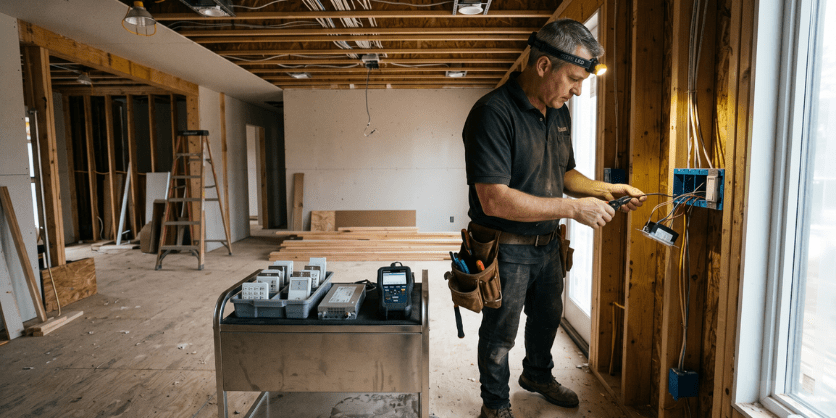
The CEDIA crossover is accelerating because lighting has become a systems category. Networked controls, tunable white, circadian programming, integration with shading and AV: these are not product features. They are systems requirements. The integration channel has 20 years of experience delivering systems. Much of architectural lighting is still debating whether systems delivery is part of the job description at all.
The manufacturers exhibiting at CEDIA are not abandoning their traditional channels. They are hedging. They see a customer, the custom integrator, the AV contractor, the smart home dealer, who is ready to buy, install, and support a complete lighting system set against a specification-side channel that is not structured to support that same workflow. The integrator wants a system they can commission. The specification channel offers a product they can spec. The manufacturer goes where the capability already lives.
This creates an uncomfortable overlap. In markets where both a specification-side relationship and a custom integration dealer are active; that same manufacturer’s products may be available through both paths at different price points with different levels of technical support. The integrator delivers a commissioned system with ongoing service. The specification side delivers a spec with a submittal package. The end client increasingly wants the former.
The response to this convergence across architectural lighting has been slow. Some organizations have added integration staff. A few have built real commissioning capability. But wherever compensation is still tied to product shipment rather than systems delivery, there is little structural incentive to make that investment, and the CEDIA channel will keep pulling systems-driven business away, one project at a time.
This is not theoretical. It is happening on trade show floors, in manufacturer boardrooms, and in the residential and light commercial projects where lighting and AV integration are becoming inseparable. The rest of the lighting channel can build the same commissioning depth the integration world already has, or watch that business move to the people who already built it.
_______________________________________________________________________________________________
About the author
Bruno H. Silva, CLCP, is an Electrical & Lighting Systems Integrator with four decades of experience spanning systems design, fabrication, controls integration, OEM manufacturing, and national sales leadership. He is the principal of TechBruno Consulting, based in Saint Augustine, Florida.
Related articles