Lighting Industry Outlook 2026: What Signify and LSI Q3 Earnings Reveal About the US Lighting Market
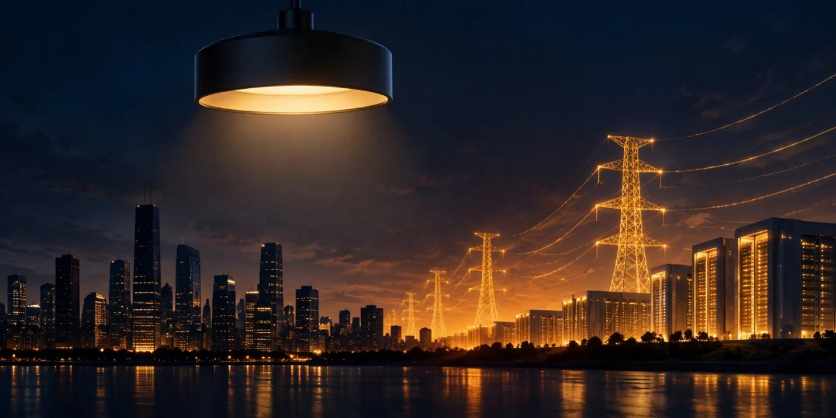
Quick answer: The US lighting market is stabilizing but not recovering. Signify Q3 2026 net sales fell 3.4% to $1.52 billion, and LSI Industries’ Lighting Segment revenue fell 6% to $64.8 million, while power, data center, and grid-focused electrical manufacturers post record growth.
By Kevin Coleman
2026 Q3 Pulse of Lighting: Industry “Challenged, but Up”
According to Electrical Trends (ET), the results of the 2026 Q3 Pulse of Lighting survey show that “the reality is [most] everyone was flat — or there were many that succeeded and others that were challenged.” Overall, he said, the industry is “challenged, but up.”
The survey showed that each segment of the channel reported a “very slight increase with each reporting between flat to low single digits (manufacturers), although, overall, each segment was below what they forecasted for the quarter.”
The results for Signify and LSI, as well as the earlier reported results for Acuity, largely prove this out.
Why Lighting Lags the Broader Electrical Products Market
While electrical manufacturers tied to data centers, utilities, and grid infrastructure are reporting some of the strongest growth in decades, the lighting sector remains a notable exception. 3Q 2026 results from Signify, the world’s largest lighting company, and the Lighting Segment of LSI Industries show a market that remains challenged by project delays, cautious customers, weak stock-and-flow distribution demand, and lingering inflation pressures.
The two companies serve different ends of the market – Signify offering a global perspective on professional, consumer, and connected lighting and LSI providing a US-focused view of commercial, industrial, retail, and outdoor lighting. Together, they paint a clear picture – the North American lighting market remains one of the softest areas within the broader electrical products industry.
Signify Q3 2026 Earnings: North America Stronger Than Europe, but Not Robust
On October 23, Signify, announced Q3 2026 earnings. Total net sales for the 3rd quarter were $1.52 billion, down 3.4% year-over-year. Adjusted operating profit increased 6.6% to $156.6 million, and adjusted operating profit margin increased to 10.6%, up 90 bps. Net income also showed significant growth, rising 15.8% to $96 million and free cash flow increased 66.2% y-o-y to $127 million. The ship is being righted.
The improvement in profitability was driven by positive pricing, disciplined cost management, and the one‑time U.S. tariff refund, despite weaker comparable sales and ongoing market softness in Professional Europe and U.S. project demand.
North America Project Demand and Professional Channel
For Signify, North America remained one of the more stable regions during the quarter. Management indicated that US project activity remained relatively resilient. Genlyte’s turnaround improved sequentially, and globally, Professional channel sales reached $1.02 billion, declining -1.5%, and profitability improved significantly from Q2 supported by gross margin expansion, indirect cost reductions and a one-time tariff rebate. Agricultural lighting remained strong. The professional project business outperformed stock-and-flow channels. However, management also warned that U.S. project demand began softening late in the quarter and is expected to remain under pressure in Q4.
Consumer and OEM Lighting Performance
The Consumer business continues to struggle, as sales declined -5.3% to $314 million, and profitability declined 30% y-o-y as lower sales volume, fixed costs and retailer destocking, particularly of Philips Hue products, impacted. The OEM channel continued to face market softness and volume remains challenged in the US and Europe. Sales declined 6.7%, with global sales of about $98 million. Profitability is slowly improving, now at 5.9%, up 110 bps as restructuring efforts continue.
Signify Guidance and Investor Concerns
Signify maintained guidance outlook, with Adjusted EBITA margin of 7.5%-8.5% and free cash flow of 6.5%-7.5% of sales. Management expects challenging end markets to persist, softer U.S. project demand and Q4 sales roughly in line with or slightly weaker than Q3.
The dominant concern for Signify (and LSI) during the analyst Q&A was if the lighting market is getting worse? Signify management acknowledged continued market weakness, weak distribution demand (for lighting) and softening U.S. project activity but argued that profitability is improving through restructuring and cost actions.
Signify investors focused heavily on the tariff refund. Management confirmed that approximately $31 million of profit improvement came from refunds and not underlying volume growth, which is a one-time impact.
LSI Industries Q1 FY2027 Earnings: Lighting Slows While Display Solutions Drives Growth
The Cincinnati, Ohio headquartered company, reported 1Q fiscal year 2027 earnings on November 5. As one of the few remaining publicly traded lighting manufacturers that reports, although not of the size or scale of the 2 majors (Signify and Acuity), LSI is a key data point for the industry. LSI’s Lighting Segment generated $64.8 million in revenue, a 6% year-over-year decline. Lighting gross margin did improve 10 bps as pricing aligned with costs.
Lighting Segment: Quote Activity Up, Orders Delayed
Management attributed the decline primarily to weakness in commercial and industrial lighting activity as customers delayed projects despite increased quoting activity. Importantly, quote activity actually increased roughly 5%, suggesting projects are being discussed but not yet awarded. Management stressed that demand had not disappeared. Rather, customers were taking longer to move from quotation to order as the operating environment remains challenged by cost inflation, rising interest rates.
Display Solutions and the Royston Acquisition
For the entire company, net sales grew 44% y-o-y in Q1FY27, including contributions from the Royston Group acquisition completed March 24, 2026. The Display Solutions segment demand remained consistent vel, offset by continued softness within Lighting segment. Display segment sales increased more than 80% y-oy, while on an organic basis, excluding Royston, sales increased 1%; pro-forma segment order rates in the fiscal first quarter increased 4%.
By end market, and primarily for the Display segment, convenience store sales increased approximately 5%, grocery customers increased orders approximately 12% as customers invested in merchandising and visual branding, while quick-service restaurant customers was one of the weakest end markets, with delays and reduced activity. Other weak verticals include parking, small retail, warehouse, and automotive—historically important verticals for LSI.
Management characterized the Lighting Segment as outperforming the broader commercial and industrial lighting market despite a lengthening quote‑to‑order cycle. Project quotation activity remained stable, with increased activity in national accounts offsetting softer general C&I activity. Weather also dampened outdoor projects earlier in the quester. Over the full nine‑month fiscal year, Lighting had grown 12% year‑over‑year on $195.8 million of sales.
The mix shift towards Display Solutions continues, as that segment accounts for 71% of sales, versus 29% for Lighting (down from 40% in August). Lighting is the support leg, rather than the growth engine and as observed earlier, especially with the Royston acquisition, this trend is accelerating.
LSI Lighting Outlook for Next Quarter
LSI management expects Lighting segment sales to decline mid‑single digits next quarter due to the lengthening quote‑to‑order cycle, macroeconomic caution, and timing delays in large capital projects. Outdoor and large‑project indoor categories—parking, high‑bay, industrial—are likely to see the sharpest pullback because they are most sensitive to project timing and broader non‑residential spending. Weather also dampened outdoor activity earlier in the year. Analysts worry that the slowdown may signal more selective non‑residential capital spending rather than just timing delays, raising questions about whether the multi‑quarter streak of above‑market growth is ending
LSI Industries Investor Concerns: Is Lighting Recovering?
The biggest shareholder concerns during LSI Industries’ fiscal 1Q 2027 earnings call were concentrated in the Lighting Segment, because that business remains the weakest part of the company despite strong growth from the Royston Group acquisition and continued momentum in grocery and convenience-store markets.
The most important concern was why is lighting still declining? Investors focused on the fact that Lighting Segment revenue declined 6% despite improving quoting activity. Management’s explanation was that commercial and industrial lighting markets remain soft, and customers are delaying project awards, arguing this is an issue of conversion timing rather than a lack of opportunities.
A closely related concern involved project conversion. Analysts questioned whether increasing quotation activity would actually become revenue. Management acknowledged that quoting trends are improving and customer discussions remain active, but many projects remain approved but unfunded or delayed and decision cycles have lengthened. Investors wanted a timetable for recovery, but management stopped short of providing one. Instead they indicated that market conditions should gradually improve as customer confidence returns.
Investors wanted to know whether current weakness was temporary or structural, contrasting weaknesses with other segments of the electrical market are growing. For lighting companies, the concerns is if margins can be maintained despite weak volumes. The steps of efficiency in both procurement, operations and manufacturing, cost discipline, headcount reductions, facility consolidations, and other margin-improvement programs can help for so long, but for how long?
The broader strategic questions is if the lighting market is recovering. LSI’s commentary suggested a lighting market that is stabilizing but not rebounding. Management essentially argued that the market is moving in the right direction but has not yet reached an inflection point where quotes consistently convert into booked orders.
What Signify and LSI Results Mean for the US Lighting Industry
The Q3 2026 results from Signify and the Lighting Segment of LSI Industries illustrate an industry still waiting for a meaningful recovery. North American project activity remains relatively healthy, but distribution demand is weak, customers are delaying purchases, including consumers who are being pressured by rising costs and less discretionary income, lighting continues to lag the broader electrical products sector.
While electrical equipment manufacturers tied to AI infrastructure and utilities are enjoying record growth, lighting companies are relying on pricing discipline, restructuring, cost control, and select vertical-market opportunities to protect profitability. The most important insight is clear, confirming the 3Q Pulse of Lighting, the U.S. lighting market is stabilizing, but it is not yet recovering with the same strength seen elsewhere across the electrical products industry.
Frequently Asked Questions: US Lighting Market 2026
Is the US lighting market recovering in 2026?
Not yet. Signify, LSI Industries, and the Q3 Pulse of Lighting survey point to a market that is stabilizing, with flat to low single-digit results, but not rebounding.
How did Signify perform in Q3 2026?
Net sales were $1.52 billion, down 3.4% year over year. Adjusted operating profit rose 6.6% to $156.6 million, helped by pricing, cost control, and a one-time U.S. tariff refund of about $31 million.
How did LSI Industries’ Lighting Segment perform?
Lighting revenue was $64.8 million, down 6% year over year. Quote activity rose about 5%, but customers are taking longer to convert quotes into orders, and management expects a mid-single-digit decline next quarter.
Why is lighting weaker than other electrical products?
Project delays, cautious customers, weak stock-and-flow distribution demand, and inflation pressure weigh on lighting, while data center, utility, and grid infrastructure suppliers see strong growth.
About the author
Kevin Coleman leads market research for Channel Marketing Group and US Lighting Trends. He can be reached at kcoleman@channelmkt.com.
Related articles