
Sculptural Lighting as a Wellness-Driven Design Strategy
By Adam Reeder, President at LightArt and VP at 3form
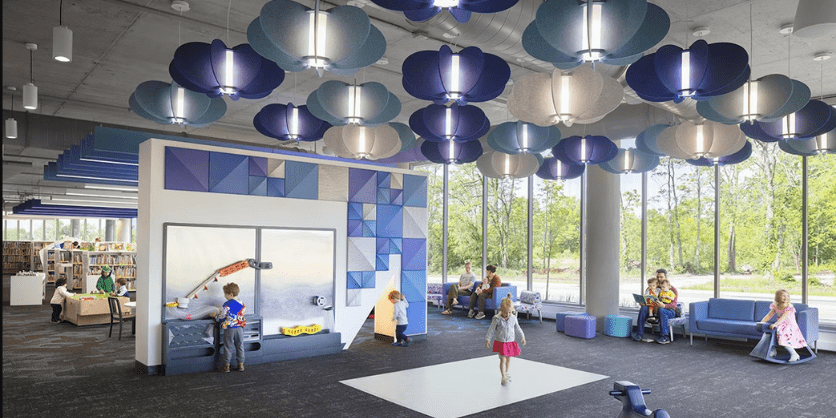
Above image: Acoustic Echo and Acoustic Static lighting fixtures in the Reynolds Branch of the Columbus Metropolitan Library in Columbus, OH (photo by Eric Piasecki/OTTO)
The lighting industry has advanced along two parallel tracks: improving technical performance tied to efficiency and wellness, while also exploring lighting as an expressive, sculptural element within the built environment. While contract lighting was once seen as a choice between aesthetics and function, it is now increasingly understood as a single, integrated design challenge — one rooted in how light shapes the human experience.
Today, wellness has moved from a peripheral benefit to a central driver of lighting design. Architects and designers are being asked to consider how light influences circadian rhythm, acoustic comfort, and emotional response within environments that are more open, flexible, and materially complex than ever before. In response, sculptural lighting is evolving beyond statement-making form into a tool for sensory comfort and performance.
Wellness Expands the Role of Lighting
As wellness becomes a measurable design outcome, lighting is no longer evaluated solely by output, efficacy, or compliance. Instead, its success is increasingly tied to how it supports focus, reduces stress, and contributes to overall comfort. This shift has elevated design strategies that soften environments rather than overstimulate them — particularly in workplaces, hospitality settings, and shared amenity spaces.
Sculptural luminaires play a meaningful role here. Their non-linear forms introduce visual rhythm and depth, helping spaces feel more human and less rigid. At the same time, these forms allow light to be diffused more gently across surfaces, reducing glare and visual fatigue. When specified thoughtfully, sculptural lighting becomes a quiet but powerful contributor to wellness rather than a purely decorative layer.
Acoustic Comfort as a Wellness Priority
The rise of open plans and harder architectural surfaces has also brought acoustics to the forefront of wellness-focused design. Poor acoustic conditions undermine concentration, increase stress, and negatively impact social interaction — regardless of how visually compelling a space may be.
As a result, designers are increasingly looking to lighting systems that integrate acoustic performance directly into the ceiling plane. Solutions such as LightArt’s Acoustic Dial pendants and Cloudform system are often selected because they solve multiple challenges at once. By combining sound absorption with high-quality illumination, these products help reduce reverberation and improve speech clarity while maintaining a cohesive visual language. For specifiers, the value lies in addressing acoustic comfort without introducing additional architectural elements or visual clutter.
Biophilic Influence and Material Choice
Biophilic design principles continue to shape how sculptural lighting is conceived and specified. Organic forms, soft geometries, and a sense of movement help reinforce psychological connections to nature — connections shown to reduce stress and support mental clarity.
Materiality is central to this approach. Designers are increasingly prioritizing products that express warmth and softness while aligning with sustainability goals. LightArt’s use of waste-diverted acoustic felt and translucent materials with recycled content reflects a broader industry shift toward responsible material sourcing. In many wellness-driven projects, these attributes are not secondary considerations; they are integral to why a product is chosen. The ability to support environmental goals while contributing to acoustic and visual comfort strengthens the overall design narrative.
Lighting Quality Beyond Compliance
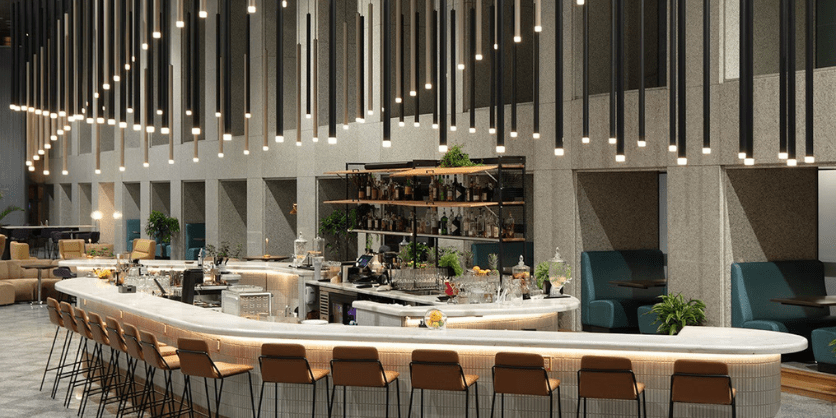
Lighting quality itself has become a key wellness metric. Diffusion, distribution, and glare control are now evaluated through the lens of human experience rather than minimum standards. Designers are asking how light behaves throughout the day, how it supports different modes of work or interaction, and how it contributes to a space’s emotional tone.
Sculptural and non-linear luminaires excel in this context. Their ability to distribute light across larger surfaces creates a softer, more immersive experience while still meeting performance requirements. Collections such as LightArt’s Echo are frequently specified for collaborative environments and hospitality spaces because they balance technical rigor with a calm, approachable presence. The lighting performs, but it also feels intentional and human.
The Emotional Dimension of Color
Color has also reemerged as a meaningful tool in wellness-oriented lighting design. Rather than serving as a purely decorative accent, color is being used strategically to influence mood, orientation, and identity within a space. Subtle tonal variations can promote calm and focus, while richer hues can energize or create moments of delight.
Sculptural lighting provides a natural canvas for this exploration. Integrated color within form allows designers to support wayfinding, reinforce brand identity, or create emotional resonance without overwhelming the architecture. In wellness-focused projects, color becomes less about statement-making and more about shaping how people feel as they move through a space.
A Broader Industry Perspective
Taken together, these shifts point to a broader transformation within the lighting industry. Lighting is no longer understood as a singular performance layer, but as a multidimensional contributor to comfort, character, and health. For manufacturers, this means expanding research and development beyond optics and efficacy to include acoustics, material innovation, and human-centered design. For specifiers, it requires a wider lens — one that values emotional response as much as measurable output.
From my perspective, the most successful lighting solutions today are those that don’t force a distinction between expression and performance. When sculptural form, sustainable materiality, and wellness-focused performance work together, lighting moves beyond utility and becomes an active participant in shaping healthier, more engaging environments. This kind of integration is no longer a trend—it’s an expectation, and one that will continue to redefine how lighting is designed and specified.
Related articles