

How to Create Great Lighting That Does Not Interfere With Night Skies
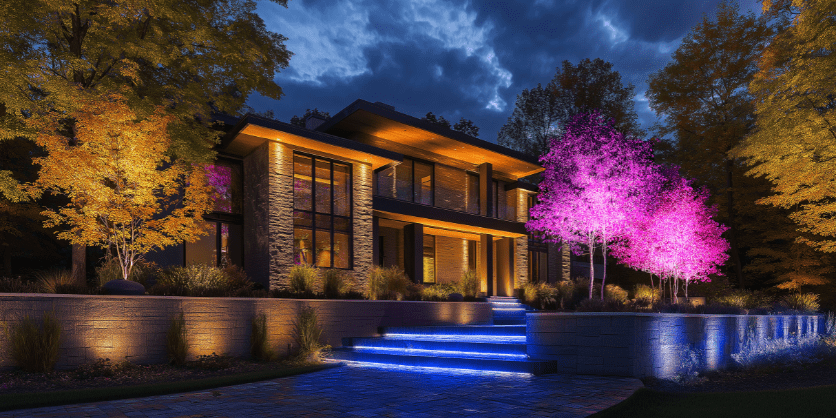
With the global emphasis on preserving night skies and reducing sky glow, outdoor lighting professionals are navigating a new design imperative: create dramatic lighting effects that showcase architecture and landscape features while minimizing skyglow and light pollution.
The Association of Outdoor Lighting Professionals (AOLP) is spotlighting this emerging trend through the voices of two industry leaders: Todd Goers, director of sales at WAC Lighting, and Kevin Smith, national technical support and trainer at Brilliance LED.
As the demand grows for responsible and refined outdoor lighting, the industry is proving that designers don’t need to sacrifice environmental integrity for visual impact. The concept behind this trend is simple but powerful: stunning light doesn’t have to come at the expense of a pristine night sky.
The Meaning Behind “Pristine Night, Stunning Light”
A “pristine night” refers to outdoor lighting that respects natural darkness, avoids unnecessary glare, and minimizes light trespass and skyglow. “Stunning light,” by contrast, refers to the visual drama, contrast, and beauty that thoughtful lighting design can create. The emerging consensus? You can and should have both.
“To me, a pristine lighting system is one that reflects what the customer really wants to feel when they look out at night,” said Kevin Smith of Brilliance LED. “It’s not just about what looks good — it’s about whether someone feels at peace when they come home. We’re not just placing fixtures; we’re designing emotion.”
Todd Goers of WAC Lighting agreed, noting that while the term “pristine night” might be new, the idea is intuitive. “A beautifully designed job isn’t just about lighting up every tree or feature — it’s about restraint,” Goers said. “Less is more. When done right, soft illumination can bring out texture and shape in ways that high-output lighting cannot.”

Techniques That Support Both Beauty & Responsibility
Designers today are using a combination of precise aiming, shielding, dimming, and scheduling to deliver a refined nighttime experience while minimizing environmental disruption.
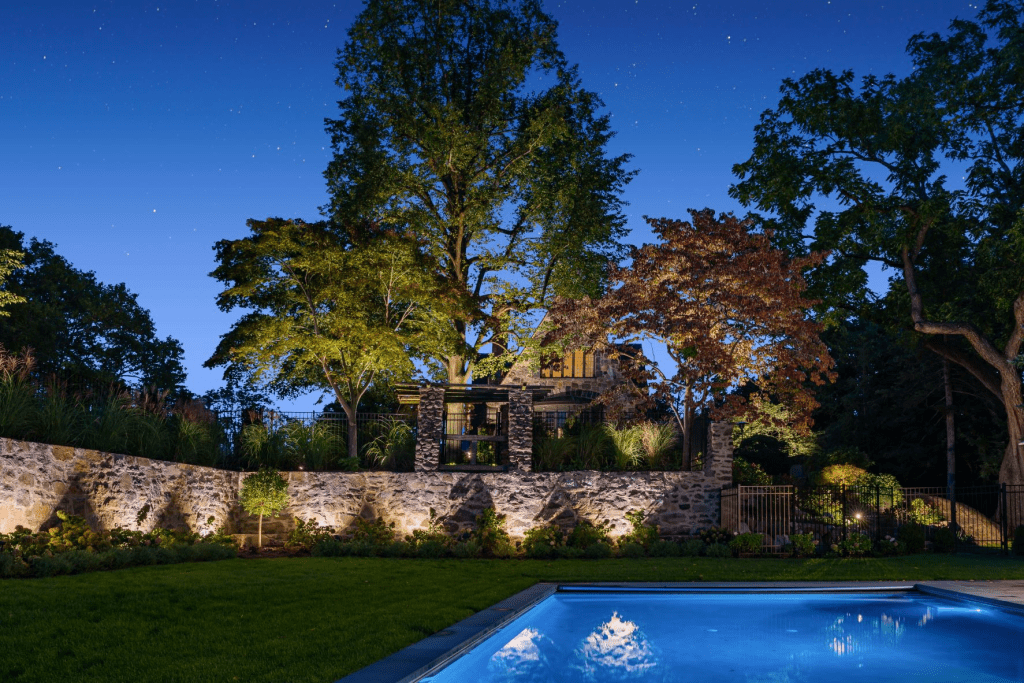
“Downlighting is key,” said Smith. “It creates beautiful moonlit effects without sending any light into the sky. Grazing walls or highlighting texture with tightly aimed fixtures avoids spill and adds drama.”
Smith emphasized the role of smart controls and dimmers. “It’s not about turning the lights off — it’s about using them well,” he added.
Goers echoed the importance of control. “With adjustable beam angles, lumen outputs, and tunable whites, lighting pros can tailor every fixture to its purpose. That means lighting only what needs to be lit and nothing more.”
Shielding also plays a major role in achieving this effect. “A few dollars spent on quality cowls and louvers can make all the difference,” said Goers. “You hide the light source, control glare, and let the effect – not the fixture – take center stage.”
Designing for Emotion, Not Just Illumination
Part of the movement toward pristine night design is a shift in how lighting is perceived — not just as a functional tool, but as a means of crafting emotional experience.
“Think about how lighting makes you feel in a restaurant,” Smith commented. “Bright lights in a fast food place tell you to eat and leave. Soft, warm lighting in a romantic setting tells you to linger. Outdoor lighting should do the same — set the mood, match the lifestyle, and support relaxation or celebration.”
Looking Ahead
As interest in dark sky preservation grows and lighting control technologies become more accessible, the balance of “Pristine Night, Stunning Light” is expected to take a more central role in both residential and commercial projects.
“Lighting is evolving,” Goers remarked. “Homeowners are getting more sophisticated. They want elegance and responsibility. With today’s tools and expertise, we can give them both.”
Related articles