
The Latest Data in the Multifamily Sector
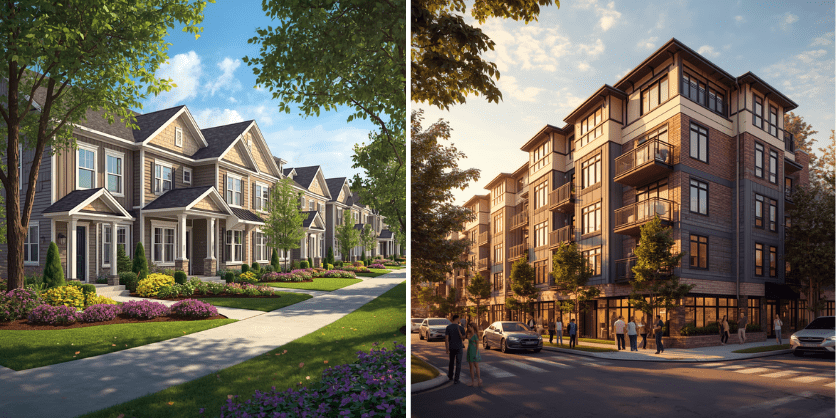
While multifamily construction remains a steady segment, there are factors tempering its growth.
The years 2021 and 2022 were boom times for the multifamily category as a result of pent-up demand and cultural shifts after the pandemic, but that momentum gradually ebbed as projects in the pipeline back then have reached completion.
According to Q2 reporting from CBRE (CB Richard Ellis) Group – the world’s largest commercial real estate services and investment firm – construction activity is expected to slow further in the coming quarters.
That’s not necessarily bad news overall as CBRE reported many positives in its recently released report, which noted the U.S. multifamily market had a more robust second quarter as apartment demand accelerated and new construction continued to moderate.
The company reported that multifamily investment volume totaled $34.9 billion in Q2 2026, down 2.7% from a year earlier. Even with the modest decline, the multifamily sector remained the largest property sector for commercial real estate investment during the quarter, accounting for 27% of total volume, according to CBRE.
“The supply wave in the U.S. multifamily sector is cresting, with deliveries down 14% year-over-year and absorption nearly doubling quarter-over-quarter,” said Kelli Carhart, head of Multifamily Capital Markets for CBRE. “Multifamily is positioned for its strongest rent recovery since 2022.”
CBRE’s Other Q2 2026 Multifamily Sector Highlights:
• The Midwest (2%), Northeast (1.7%) and Pacific (1.4%) regions led the U.S. in year-over-year rent growth.
• All 69 markets tracked by CBRE recorded positive net absorption, up from 65 markets in Q1 2026. New York led with 17,600 units, followed by Dallas (10,000) and Denver (6,600).
• Net absorption exceeded new supply in 68 markets, up from 47 markets in Q1 2026.
• Vacancy rates declined quarter-over-quarter in 68 markets, compared with 42 markets in Q1 2026.
Commercial real estate data and research platform Yardi Matrix published its Multifamily National Report in August with similar findings.
“Among Matrix top 30 markets, San Francisco remains the clear standout, leading the nation in advertised rent and occupancy rate growth. Gateway and Midwest markets continue to outperform, though momentum in some Midwest metros is cooling,” the national report stated.
“Another positive sign is that advertised rents in several high-supply markets – including Denver, Portland and Austin – have become less negative, suggesting supply-driven pricing pressure is gradually easing. With deliveries slowing, the development pipeline contracting and demand remaining resilient, the supply-demand balance continues to move in a more favorable direction,” the Yardi Matrix Multifamily National Report said.
In July, valuation-focused real estate brokerage HouseCanary, which provides software and services, published “2026 Housing Market Predictions: Mid-Year Reset and What Comes Next.”
HouseCanary’s assessment is this: “After the whiplash of 2020–2022 and the frozen market of 2023–2024, the story for the rest of 2026 is stability — not a boom, not a crash. The disagreement among forecasters is only about how much prices rise, not whether they do.”
It added that “estimates for 2026 home price growth run from under 1% (Mortgage Bankers Association) to 4% (National Association of Realtors) — a spread that tells you the real variable isn’t direction, it’s how fast affordability and rates loosen up.”
Speaking of “affordability,” according to several homebuilder forums that USLT has attended, the key phrase for having any housing construction project greenlit quickly with the least amount of red tape – whether single-family dwellings or multifamily – is “affordable housing.”
The government’s goal of fast-tracking more affordable housing initiatives is an incentive for homebuilders and property developers to keep business flowing consistently in 2027 and beyond.
Contributing factors
The age of first-time homebuyers continues to rise – recent estimates range from 34 to 40 years old, depending on the metric used, versus a median age of 31 roughly 10 years ago – but even being more advanced in their careers hasn’t helped them stay ahead of soaring home prices and higher interest rates. This age bracket is also when many couples begin to start their families — which typically translates to needing more living space.
For young couples, being able to afford a single-family home spacious enough to accommodate a growing family is often beyond their means. This is where multifamily and build-to-rent (BTR) communities have become an attractive alternative. Just as leasing is a common method for being able to drive a higher-end car that would ordinarily be priced out of reach, renting a home is a way for families to have the space they need without the mortgage payment and property taxes.
For long-time homeowners, the inflated housing prices have incentivized them to sell their homes in order to maximize their investment. Not wanting to use that profit to pay for a different home at a higher interest rate, they are opting to rent while waiting for the housing market to recalibrate.
According to Matthews™, reportedly the largest privately held commercial real estate firm in the U.S., the BTR niche in the rental market is strong.
“The BTR pipeline in the U.S. remains substantial. Industry reporting shows that more than 64,000 build-to-rent homes are currently under construction, with deliveries expected to extend through late 2027. In addition, approximately 139,000 units remain in various planning and pre-development stages, signaling that developers continue to advance projects despite ongoing market headwinds,” Matthews noted in its article, “Why Build-to-Rent Is Shaping the Housing Market in 2026.”
It continued, “This level of activity suggests the sector will continue to meaningfully add to rental housing supply, particularly in high-growth markets where traditional multifamily development has slowed.”
The experts at Matthews conclude, “The build-to-rent market is no longer a fringe strategy; it is a core component of U.S. rental housing supply. With a significant pipeline still underway and a noticeable shift toward consolidation under top operators, BTR’s footprint is becoming both larger and more institutionalized.”
Of course, there are outlying factors affecting the housing market, such as higher materials and construction costs, plus interest rates holding steady at a higher-than-desired percentage. These conditions can affect property development of all kinds for the rest of 2026 and all of 2027.
Related articles
How Strong Is the Multifamily Sector? Depends on Who You Ask