Experts Say Multifamily Market May Slow in 2026
When the single-family new construction market stalled in 2025 due to rising interest rates, there was concern among lighting showrooms that had relied heavily on a robust builder business as well as from lighting manufacturers whose core offering was comprised of white goods and builder-grade products.
Meanwhile, the multifamily segment of the construction market was growing due to a population increase in certain regions of the Sun Belt as tax incentives lured large corporations to relocate their headquarters (typically from California) to states that were more business-friendly as well as provided a more affordable cost of living. In addition, large parcels of available land all over the Sun Belt were being purchased to meet the rising need for data centers, tech hubs, and specialized healthcare facilities.
For example, energy technology company EnergyX recently acquired 35K gross acres of land in the “Smackover region” – which touches Arkansas, Louisiana, Texas, Alabama, Mississippi, and Florida – with the goal of building one of the largest lithium production facilities in the country. According to the company, its Project Lonestar™ will generate approximately $100M+ in regional economic growth and provide 200 full-time jobs.
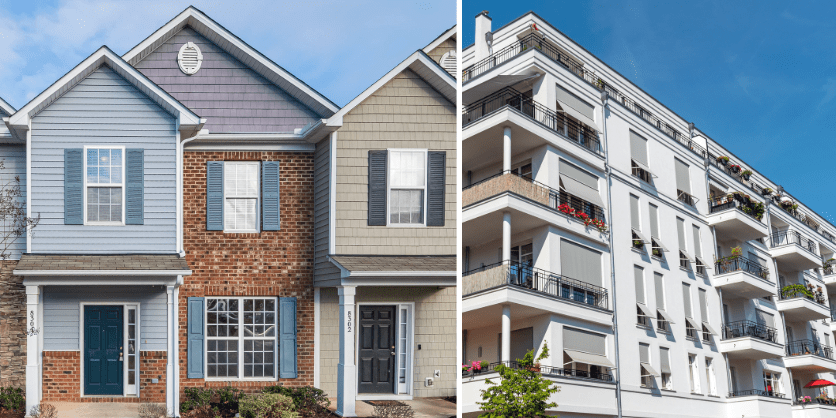
And what is the quickest and most economical way for these companies to accommodate the influx of people they intend to bring to a given area? Constructing high-rise apartments, townhome communities, and condo complexes.
As single-family home construction slowed, multifamily projects began ramping up. For lighting showrooms and electrical supply houses, it was a relatively simple pivot. Lighting manufacturers such as fixture company AFX and lamp supplier Bulbrite, for example, began expanding into new categories (ceiling fans for AFX and disc lights and wrap lights for Bulbrite) in order to broaden their company’s appeal to specifiers and contractors in the multifamily market looking for one-stop-shop suppliers.
While the first half of 2025 was still showing significant growth in multifamily, the back half of the year lost some momentum as long-term projects in the pipeline reached completion.
Over the past two years, supply has been gradually catching up with demand. As recently as last month’s Lightovation show, multifamily projects were still outpacing single-home construction according to industry members I spoke with, but it was beginning to level off. A Q2 report from Cushman & Wakefield predicted that multifamily would ease in the second half of 2025 — and that appears to have been true.
At this month’s International Builders’ Show in Orlando, economists addressing the National Association of Home Builders (NAHB) also expressed some caution. “The rental market has slowed following a pandemic-era boom due to demographic changes, softer labor market and rising vacancies and is moving towards a more constrained development environment,” they said.
Noted Molly Boesel, senior principal economist at Cotality, who spoke at the Builders’ Show, “The national multifamily vacancy rate ran up to a record high 7.3% in December. We’re past the peak of a multifamily construction surge, but a healthy supply of new units is still hitting the market and colliding with sluggish demand, causing vacancies to continue trending up.”
In a post-Builders’ Show statement, the NAHB indicated that home affordability challenges has caused many renters to stay in the rental market. High supply helped push multifamily rents down 1% year-over-year while single-family rent growth slowed.
According to NAHB’s recently released statistics, the multifamily market is experiencing a rise in delinquency rates, but remains well below office building delinquencies. “Delinquency rates are rising due to higher interest rates, changes in property market fundamentals and uncertainty about property valuation,” Boesel told attendees at the Builders’ Show.
Looking ahead, the NAHB expects multifamily starts to fall 5% in 2026 to an annual pace of 392,000 units and decline an additional 6% in 2027 to a 367,000 rate, leveling off near pre-pandemic levels.
“The multifamily market has slowed due to tighter financing and elevated construction costs and is moving towards a more constrained development environment,” explained Danushka Nanayakkara-Skillington, NAHB’s assistant vice president for forecasting and analysis. “However, despite the pullback in starts, multifamily completions reached a 38-year high in 2024 with 608,000 units as projects initiated during the boom years were delivered to market.”
The composition of multifamily production has shifted toward larger properties as 50+ unit buildings accounted for 54% of completions in 2024, the highest share in decades.
Nanayakkara-Skillington pointed out that the “missing middle” construction sector – which includes development of medium-density housing, such as townhouses, duplexes and other small multifamily properties – remains limited. She remarked that the multifamily segment of the missing middle (apartments in 2- to 4-unit properties) has generally disappointed since the Great Recession, totaling just 4,000 starts in third quarter of 2025, representing only 3% of multifamily production.
That said, all regions of the country saw increases in multifamily completions in 2024, with the South dominating total volume:
• South: +37%
• West: +36%
• Midwest: +31%
• Northeast: +23%
According to the most recent NAHB Multifamily Market Survey (MMS), confidence in the market for new multifamily housing shows production sentiment improving, while occupancy conditions remain comparatively strong despite elevated vacancies nationally.
“In addition to tight lending conditions and high construction costs, the local regulatory environment continues to be a major headwind to faster growth,” said Nanayakkara-Skillington.
Meanwhile, the Multifamily Occupancy Index (MOI) had a reading of 74, indicating existing apartment owners are positive about occupancy.
Another positive: the industry will most likely be supported by a potential influx of young adults as they enter the housing market.
All in all, experts who spoke at the Builders’ Show are in agreement that 2026 will not see the growth numbers that 2024 and the first half of 2025 generated, but it won’t have as significant of a decline as experienced recently in single-family new construction.
Related articles
Lightovation Report: Multifamily Housing Trending as a Driver for Showroom Business
AFX Expands Multifamily Options With Ceiling Fan Line