
Lead Generation Is Only Half the Battle. The Lead Experience Drives Lighting Agent Mindshare.

Lighting manufacturers spend a lot of money generating leads through advertising, websites, trade shows, and other marketing activities. But here’s a question worth asking: What happens to those leads once they’re generated?
Generating leads is only half the battle. What happens next is just as important.
A good lead management process should accomplish two things. First, create a great experience for the agent receiving the lead. Second, make sure the customer who made the inquiry gets the timely, professional response they’re expecting.
And there’s a lot more value in that process than simply generating another sale.
Don’t Bury Your Agents With Bad Leads
One of the biggest mistakes manufacturers make is passing along leads that haven’t been properly researched or screened.
Think about the experience from the agent’s perspective. They receive a lead with an incomplete company name, no phone number, little information about the customer’s needs, and sometimes there is not even a clear reason for the inquiry.
Now the agent has to spend time figuring out whether there’s a real opportunity before they can even begin selling.
Do that often enough, and the agent starts losing confidence in the manufacturer’s leads. Eventually, those leads become a lower priority.
Bad leads don’t build channel mindshare. They can actually damage it.
The answer isn’t complicated. Validate the company, complete the missing information, screen the inquiry, and make sure the lead gets to the right agent. Give them something they can actually work with.
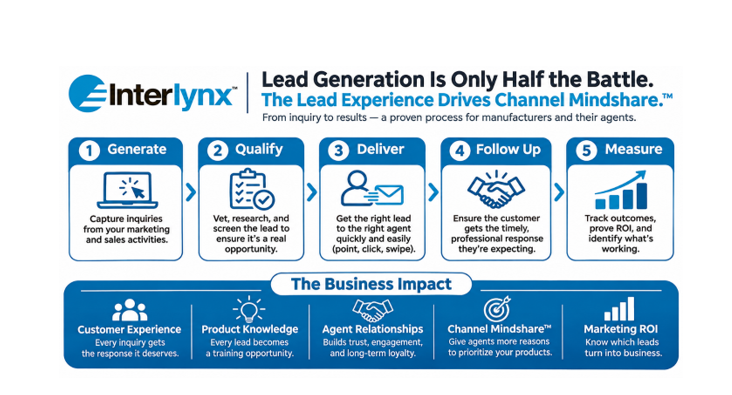
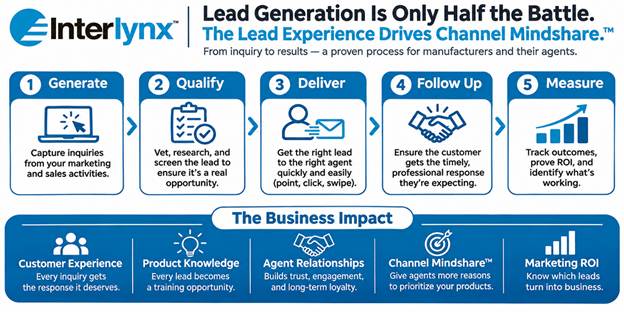
The Lead Experience Matters
Once you have a quality lead, getting it to the right agent quickly is important. But making it easy for the agent to work that lead is equally important.
Independent agents represent multiple manufacturers. The last thing they want is another complicated system that requires training, passwords, and a lot of administrative work.
The process should be simple. Receive the lead, review the information, contact the customer, and provide feedback. With today’s technology, which should be a point-click-swipe experience.
And here’s something manufacturers sometimes overlook: every lead you send is another opportunity for the agent to learn about your products.
Maybe it’s a product they haven’t sold before, a new application, or a customer they haven’t worked with. Every interaction builds experience and familiarity with your product line.
That’s practical training, and it happens naturally as agents work the opportunities you provide.
Don’t Forget About the Customer
There’s another person in this process who is just as important: the customer who made the inquiry.
They took the time to express interest in your products. They expect someone to respond, and they probably don’t care whether that person works for the manufacturer or an independent agency.
They just want their question answered.
A good lead management system makes sure the inquiry reaches the right person, follow-up happens promptly, and someone is accountable for the outcome.
Otherwise, that customer may never hear back. And that’s not just a lost sales opportunity. It’s a poor experience with your brand.
This Is How You Build Channel Mindshare
Lighting agents represent multiple manufacturers, and they’re constantly deciding where to spend their time.
So how do you get more of their attention?
Give them good opportunities to sell and make it easy to work with you.
When an agent consistently receives quality leads from a manufacturer, that manufacturer becomes a more valuable partner. The agent gets more exposure to the product line; gains experience and has more reasons to engage with the manufacturer’s products.
It’s not difficult to understand why that manufacturer might get a little more attention than one that never provides an opportunity.
That’s channel mindshare, and it’s one of the most overlooked benefits of a good lead management program.
Know What’s Happening to Your Investment
Finally, manufacturers need to know what happens to the leads they’re paying to generate. Was the customer contacted? Did the inquiry turn into a project or quotation? Was the business won or lost? Without that information, it’s difficult to know whether your marketing investments are producing results.
A closed-loop lead management process provides that visibility without requiring agents to spend a lot of time updating another system. It also gives management a baseline for measuring ROI and understanding which marketing activities are generating business.
The Bottom Line
Manufacturers don’t necessarily need more leads. They need to do a better job with the leads they already have.
Make sure they’re properly researched and screened. Get them to the right agents quickly. Make the process incredibly easy. Follow up with the customer and track the outcome. Do those things consistently, and you’re accomplishing a lot more than just managing leads.
You’re developing your agents, building product knowledge, strengthening relationships, improving the customer experience, and driving channel mindshare.
Generating the lead is only half the battle. The real opportunity is creating a great lead experience.
About the Author
Larry White is President of Interlynx Systems, a provider of Channel Performance Systems for manufacturers, independent representatives, and distributors, with a strong focus on the electrical and electronics industries.